National Resilience | Maritime Supply Chain Security | Strategic Preparedness
The Sector at a Glance
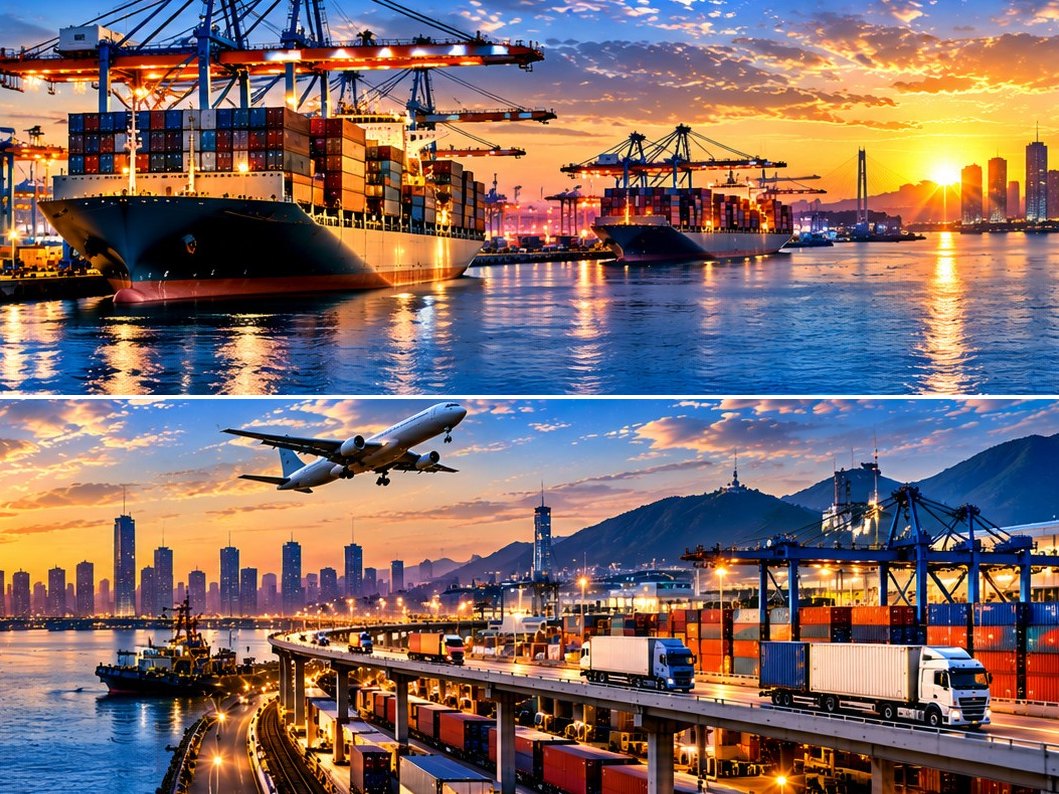
Maritime infrastructure, logistics and supply chains together form the circulatory system of a trading nation. The bulk of Bharat's external trade by volume, and a very large share of its energy, fertiliser, edible oil, electronics and industrial inputs, arrive and depart by sea; and every one of those movements depends on a chain of physical assets, digital systems and institutional arrangements working in sequence. The sector covered under this tab extends across sea lanes and shipping services, container, bulk, liquid and roll-on roll-off cargo flows, transhipment hubs, coastal shipping, port-linked logistics parks, container freight stations and inland container depots, dedicated freight corridors and multimodal evacuation, cold chains, warehousing, freight forwarding, ship chartering, marine insurance and trade finance.
The scope of this tab is not limited to ships and cargo. It covers the full logistics value chain behind a single consignment: the vessel and its flag, the ownership of the container and the leasing pool behind it, the terminal operating system, customs and port community platforms, the rail or road link to the hinterland, and the data that tracks it all. It is this end-to-end chain, and not the berth alone, that determines whether Bharat's trade moves on its own terms or on terms set elsewhere.
Why This Sector Is Critical
Maritime supply chains are not a commercial convenience; they are a condition of national continuity. Refineries, power stations, fertiliser plants, pharmaceutical units and defence production lines all rely on inbound cargo arriving on schedule. When a chokepoint is disrupted, when freight rates spike, when container availability collapses or when a transhipment hub abroad deprioritises Indian cargo, the shock does not stay in the shipping market; it travels inward into factory output, food prices, energy security and fiscal stability. The experience of recent global disruptions, from pandemic-era container shortages to insecurity along major sea lanes, has shown how quickly distant events translate into domestic scarcity.
This is why the BAP-I mandate treats maritime logistics as a sovereignty concern rather than a matter of freight economics alone. Bharat remains structurally dependent on foreign-flagged tonnage, foreign-owned container fleets and transhipment through ports outside its jurisdiction; and its logistics data, insurance cover and chartering decisions are frequently controlled by external entities. It is argued that a nation which does not carry, insure, tranship or track a meaningful share of its own trade carries a structural vulnerability that becomes visible only in a crisis, when it is too late to correct.
The Bharat Context
Bharat occupies a commanding position astride the major east to west sea lanes of the Indian Ocean, with a long coastline, a growing set of major and non-major ports and expanding trade volumes. Yet its share of national-flag carriage remains modest, a significant portion of its container traffic is still transhipped through foreign hubs, its container manufacturing and leasing base is thin, and logistics costs have historically weighed on the competitiveness of its exports. Coastal shipping and multimodal integration remain underused, and the hand-offs between port, rail, road and customs continue to generate friction, dwell time and data gaps.
The enabling environment, however, has strengthened considerably. The Sagarmala Programme, Maritime India Vision 2030 and the longer-horizon Maritime Amrit Kaal Vision, PM Gati Shakti National Master Plan, the National Logistics Policy, the Unified Logistics Interface Platform and the dedicated freight corridors together provide a planning and investment base for integrated maritime logistics. The development of the Vizhinjam deep-water transhipment port, the planned Galathea Bay terminal and the Vadhavan port point to a deliberate effort to reduce reliance on foreign transhipment hubs. Demand-side anchors such as Make in India, PLI-linked manufacturing and strategic petroleum reserves confirm that the cargo base exists. What remains absent is a unified research-to-resilience framework that measures supply chain exposure at the commodity and chokepoint level and links it to national preparedness planning; and this is the gap that BAP-I seeks to address through this tab.
Importance of the Sector
Economy
Maritime logistics is a cost multiplier for the entire economy. Every reduction in port dwell time, inland haulage cost or transhipment dependence feeds directly into the price competitiveness of exports and the affordability of imports. Indigenous capacity in shipping services, container ownership, terminal operations, marine insurance and freight finance retains within Bharat value that is presently earned abroad, improving the services trade balance. Efficient port-led logistics also unlocks coastal economic zones, industrial clusters and port-based manufacturing, while resilient supply chains reduce the macroeconomic cost of external shocks on inflation, energy prices and production schedules.
Employment
The sector employs across an unusually wide spectrum: seafarers and officers, port and terminal staff, crane and equipment operators, customs brokers, freight forwarders, warehouse and cold chain workers, truck and rail operators, logistics planners, data analysts and maritime lawyers. Bharat is already a significant supplier of seafarers to the global fleet, and this human capital base can be extended into shore-side management, chartering, ship operations and logistics technology. Skill gaps remain in supply chain analytics, digital freight platforms, dangerous goods handling and multimodal operations; and closing them through maritime training institutes and national skilling programmes offers both employment depth and resilience.
Entrepreneurship
Maritime logistics is being reshaped by digitisation, and this opens space for start-ups and MSMEs that do not need to own ships or terminals. Digital freight marketplaces, container tracking, cargo visibility platforms, predictive dwell-time analytics, cold chain monitoring, customs automation, green logistics solutions and last-mile port evacuation services are all areas where focused enterprises can build value. Coastal shipping and inland container depots also offer room for regional operators. It is argued that the next tier of Bharat's logistics capability will be built by enterprises that make the chain visible and predictable; provided that data access, port community platforms and public procurement are opened to them on fair terms.
Partnership
Supply chain resilience is inherently collaborative. The sector calls for structured partnership between port authorities, shipping lines, railways, customs, logistics service providers and cargo owners; between central ministries and coastal states for land, connectivity and hinterland planning; and between Bharat and trusted partners for diversified sea lanes, shared port investments and corridor initiatives. Such partnerships must, however, be designed so that collaboration diversifies dependencies rather than relocating them. BAP-I positions itself as the convening platform where these stakeholders can meet on shared research questions.
Research Focus Possibilities
BAP-I invites original research articles, policy papers, technical reports, diagnostic assessments, case studies and white papers across the following indicative research streams. The list is open-ended; contributions that connect a new question to the resilience objective of this tab are equally welcome.
A. Supply Chain Exposure and Chokepoint Risk
- Commodity-level mapping of Bharat's critical seaborne imports, such as crude oil, LNG, fertilisers, edible oils and electronic components, against the sea lanes and chokepoints through which they pass
- Scenario modelling of disruption at major chokepoints and its transmission into domestic prices, production schedules and strategic reserves
- Dependence on foreign transhipment hubs for Indian container traffic and the resilience gains from domestic transhipment capacity
- Container availability, ownership and leasing dependence, and the case for an indigenous container manufacturing and leasing base
B. Fleet, Carriage and Maritime Services
- National-flag carriage of strategic cargo: barriers to tonnage growth, fiscal and regulatory disincentives and the options for correction
- Sovereign capacity in marine insurance, protection and indemnity cover, ship finance and chartering, and the risks of external control over these services
- Coastal shipping as a resilience asset: modal shift potential, cabotage policy and the economics of short-sea routes
C. Multimodal Integration and Logistics Infrastructure
- Port-hinterland evacuation bottlenecks and the role of PM Gati Shakti and dedicated freight corridors in reducing dwell time
- Performance assessment of port-linked logistics parks, inland container depots and container freight stations
- Cold chain and temperature-controlled maritime logistics for food, pharmaceuticals and vaccines
- Integration of coastal economic zones and industrial clusters with port-led logistics planning
D. Digital Systems, Data and Governance
- Data sovereignty in port community systems, cargo tracking and terminal operating systems, including dependence on foreign software and platforms
- Cyber resilience of logistics platforms and the cascading consequences of a cyber incident at a major port or shipping line
- Effectiveness of the National Logistics Policy and unified logistics interfaces in measurable cost, time and reliability outcomes
- Decarbonisation of maritime logistics and its implications for green corridors, fuel supply and trade competitiveness
Who Can Participate
This tab invites participation from port authorities and terminal operators, shipping companies and coastal operators, railways and dedicated freight corridor agencies, logistics service providers and freight forwarders, cargo owners and industry associations, customs and trade facilitation bodies, the Indian Maritime University and maritime training institutes, IITs, IIMs and logistics research centres, marine insurers and ship financiers, naval and coast guard planners, policy think tanks, international collaborators and individual researchers with domain expertise. Contributions from practitioners, policymakers and academics carry equal standing within the BAP-I research framework.
The Resilience Objective
Every contribution under this tab must serve one purpose: ensuring that Bharat's seaborne trade, and the energy, food and industrial inputs it carries, continues to move under conditions of disruption, denial or conflict. BAP-I treats maritime logistics as a strategic lifeline, and research as the instrument through which its exposures are identified, measured and closed.