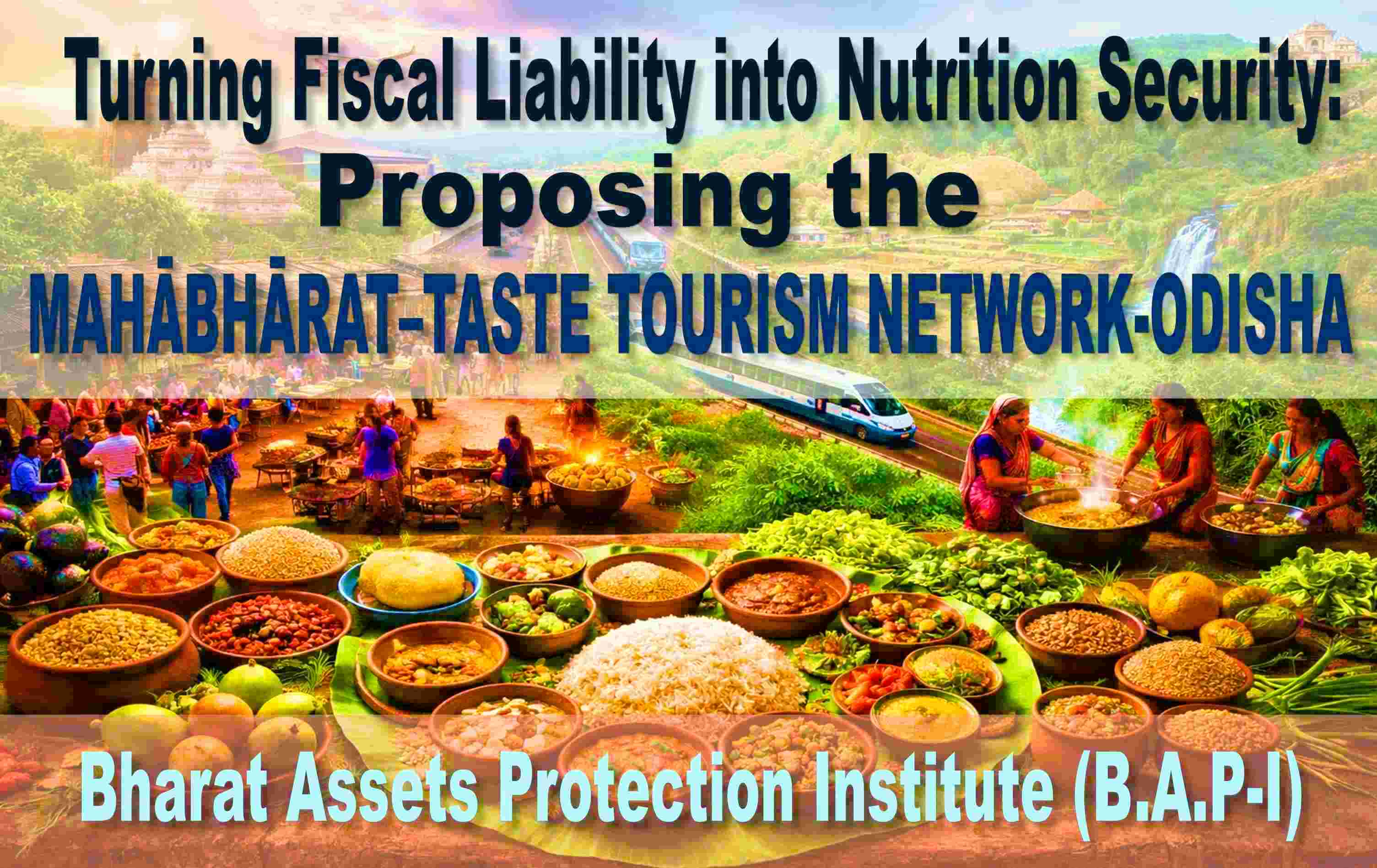
National Resilience | Food System Security | Strategic Preparedness
The Sector at a Glance
Food technology and food processing cover the transformation of raw agricultural, horticultural, dairy, livestock, poultry and fisheries produce into safe, stable, nutritious and marketable food. The sector covered under this tab extends across primary processing such as cleaning, grading, milling and pulping; secondary and tertiary processing into dairy products, edible oils, bakery and confectionery, beverages, ready-to-eat and ready-to-cook foods, processed fruits and vegetables, meat, poultry and marine products; and the enabling technologies of preservation, fermentation, extrusion, freezing, dehydration, aseptic and modified atmosphere packaging, fortification and food safety testing.
The scope of this tab extends to the full food system chain around processing: farm-gate aggregation and pre-cooling, cold chains and reefer transport, mega food parks and processing clusters, packaging, quality assurance and laboratory infrastructure, distribution to retail, institutional and export markets, and the recovery of by-products and residues. It also includes emerging frontiers such as alternative proteins, millet-based and functional foods, and precision fermentation. It is the strength of this whole chain, from harvest to plate, that determines whether Bharat's abundant production becomes secure, year-round nutrition or is lost before it reaches the consumer.
Why This Sector Is Critical
Food processing sits at the meeting point of food security, farm income and public health. By extending shelf life, it allows seasonal and perishable production to feed the nation through the year and through emergencies; by adding value, it raises farm-gate prices and reduces distress sales; and by fortifying staples and supplying institutional feeding programmes, it becomes an instrument of nutrition security. Military rations, disaster relief supplies and emergency food stocks all depend on a reliable processing base, which makes the sector a quiet but essential part of national preparedness.
Its vulnerabilities are equally significant. Post-harvest losses in perishables remain high where cold chains and processing capacity are thin; the sector depends on imported processing machinery, certain ingredients, additives and packaging materials; and it is exposed to food safety failures, adulteration and contamination that can damage public health and export credibility at once. A disruption in power, cold storage, packaging supply or transport can spoil inventories within hours. It is argued that food processing must therefore be treated as part of the nation's critical food infrastructure, and not only as a downstream industry.
The Bharat Context
Bharat is a leading producer of milk, pulses, fruits, vegetables, cereals, spices and marine products, yet the share of this production that is processed remains modest when set against the scale of output. The sector is dominated by small and unorganised units with limited access to technology, finance, testing and branding; cold chain infrastructure is unevenly distributed and often poorly linked to farms; much of the specialised processing and packaging machinery is imported; and food testing capacity, though growing, is not yet adequate for the volume of food moving through the system.
A substantial set of national programmes now supports the sector. PM Kisan Sampada Yojana funds mega food parks, cold chains, processing clusters and Operation Greens; the PLI Scheme for Food Processing Industry encourages scale and branding; and the PM Formalisation of Micro Food Processing Enterprises scheme supports small units under the One District One Product approach. The Agriculture Infrastructure Fund finances post-harvest assets, FSSAI sets and enforces food safety standards, the Eat Right India movement promotes safe and healthy diets, and APEDA and MPEDA support exports. Institutions such as CSIR-CFTRI, NIFTEM and ICAR institutes provide research and training. What remains missing is a resilience lens that links processing capacity to national food stocks, nutrition programmes, disaster preparedness and import dependence in machinery and inputs; and this is the role BAP-I seeks to play through this tab.
Importance of the Sector
Economy
Food processing is a bridge between agriculture and industry. Every unit of produce that is processed rather than wasted adds value within the country, raises farm incomes and reduces price volatility in seasonal crops. The sector draws investment into food parks, cold chains, packaging, machinery and testing laboratories, and generates export earnings from processed foods, marine products, spices and specialty items. A domestic food machinery industry, if developed, would further reduce import dependence and serve markets in other developing economies with similar crops and conditions.
Employment
The sector is one of the more employment-intensive branches of manufacturing, and much of that employment arises in rural and semi-urban areas close to the source of produce. Small processing units, dairies, rice and flour mills, pack houses and fish processing plants absorb local labour, with significant participation of women in sorting, grading, packaging and traditional food preparation. Modern plants require food technologists, microbiologists, quality analysts, refrigeration and packaging engineers, and the skilling of micro-entrepreneurs in hygiene, standards and product development remains a priority for the sector.
Entrepreneurship
Food processing is one of the most accessible fields for micro-enterprises, self-help groups, farmer-producer organisations and start-ups. Opportunities exist in regional and traditional foods, millet-based and nutrition-focused products, pickles and condiments, dairy and bakery products, dehydrated and frozen produce, alternative proteins, food testing services and small-scale processing equipment. Credit-linked support for micro units, incubation at food technology institutes and access to shared processing infrastructure can lower entry barriers. It is argued that the formalisation of the small processor is the single largest lever for both quality and scale in this sector; provided that compliance is made simpler rather than costlier.
Partnership
The sector calls for partnership between farmers' collectives and processors for assured supply and fair prices, between research institutions and industry for technology transfer and product development, between food parks and MSMEs for shared infrastructure, between industry and FSSAI-recognised laboratories for testing, and between processors and public nutrition and procurement programmes for stable institutional demand. International collaboration in food safety standards and export market access is equally valuable. BAP-I positions itself as the convening platform where these stakeholders can meet on shared research questions.
Research Focus Possibilities
BAP-I invites original research articles, policy papers, technical reports, diagnostic assessments, case studies and white papers across the following indicative research streams. The list is open-ended; contributions that connect a new question to the resilience objective of this tab are equally welcome.
A. Post-Harvest Loss and Cold Chain Infrastructure
- Commodity-specific assessment of post-harvest loss in fruits, vegetables, dairy and fisheries, and the most cost-effective interventions at farm, aggregation and processing stages
- Design and viability of decentralised pre-cooling, pack houses and solar-powered cold storage for smallholder regions
- Performance evaluation of mega food parks and processing clusters against their intended farm linkages
B. Food Safety, Quality and Nutrition
- Adequacy of food testing laboratory capacity and surveillance systems against the volume and risk profile of Indian food supply
- Adulteration and contamination risks in milk, edible oils, spices and packaged foods, and the effectiveness of enforcement
- Large-scale fortification of staples and processed foods for public nutrition programmes, with evidence on outcomes
- Food safety capability of micro and small processors and practical models for compliance support
C. Technology, Machinery and Innovation
- Indigenisation of food processing, packaging and cold chain machinery, and the import dependence of the current equipment base
- Shelf-life extension, minimal processing and sustainable packaging technologies suited to Indian foods and climate
- Millet processing, alternative proteins and functional foods as innovation frontiers for domestic and export markets
- By-product and waste valorisation from processing residues into feed, energy and bio-based materials
D. Food Security, Enterprise and Policy
- Role of processed and ready-to-eat food stocks in defence logistics, disaster relief and emergency preparedness
- Evaluation of PMFME, PLI and ODOP interventions on formalisation, branding and farm income
- Export competitiveness of processed foods and compliance with residue, traceability and sanitary standards in key markets
Who Can Participate
This tab invites participation from food processing enterprises of all sizes, micro food units, self-help groups and farmer-producer organisations, dairy and fisheries cooperatives, cold chain and logistics operators, CSIR-CFTRI, NIFTEM, ICAR institutes and state agricultural universities, food technology and nutrition departments of universities, FSSAI-recognised laboratories, packaging and machinery manufacturers, export promotion bodies, public nutrition and procurement agencies, defence and disaster relief logistics planners, policy think tanks, international collaborators and individual researchers with domain expertise. Contributions from practitioners, policymakers and academics carry equal standing within the BAP-I research framework.
The Resilience Objective
Every contribution under this tab must serve one purpose: strengthening Bharat's capacity to turn its agricultural abundance into safe, nutritious and secure food for every citizen, in every season and through every crisis. BAP-I treats research here as the instrument through which food system resilience is identified, measured and built.