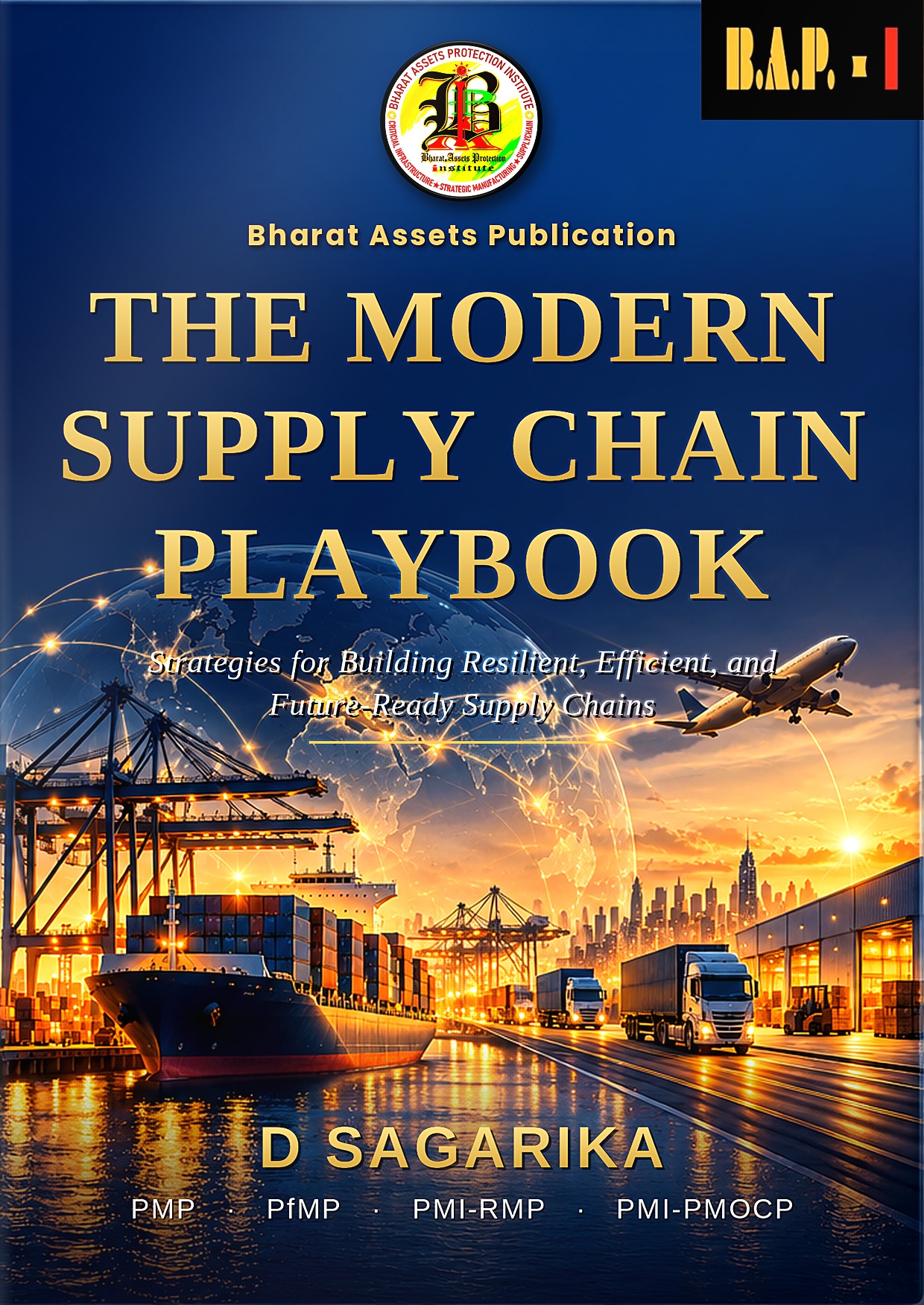
Modern supply chains are undergoing a profound shift. The world is uncertain, technology is accelerating, customers expect more, and risk sits in every corner of the operating landscape. The traditional approach built on cost efficiency and linear execution no longer fits an environment shaped by volatility, complexity, and continuous disruption. This book presents a framework for the next generation of supply chains: systems that stay resilient under pressure, systems that think and respond with intelligence, and that grow without breaking.
At its core, the work brings together strategy, governance, technology adoption, human capability development, and operational execution as one connected philosophy rather than isolated disciplines. The work argues for supply chains designed from the customer backwards. It positions reliability as the foundation of trust and treats value as a layered outcome rather than a narrow financial metric.
The book explores how risk-led architecture strengthens resilience, how meaningful Key Performance Indicator (KPI) systems improve decision quality, how review rhythms shape accountability, and how Project Management Office (PMO)-driven execution and portfolio governance resolve the conflicts that quietly erode performance. It examines the tension between standardization and agility, showing how operating models can remain stable while still adapting to change in a dynamic environment.
A dedicated section focuses on the human side of supply chain excellence, how talent is hired, how roles are ergonomically designed, how workload pressure accumulates, and how organizations build the maturity, viz. through change readiness, required to adopt new technology. The message is clear: technology without capability creates fragility, not progress.
The book studies the impact of artificial intelligence, automation, and platform ecosystems, analyzing how these forces reshape decision-making, shift power across the logistics landscape, and accelerate market consolidation. It also addresses national priorities such as Make in India, India’s manufacturing ambitions and the capability gaps that must be closed to compete globally.
The closing framework introduces the idea of the Supply Chain Flywheel, a model in which governance, capability, data intelligence, customer experience, and continuous improvement reinforce one another to build momentum over time. The book stands at the intersection of research, strategy, and practice, offering a coherent way to think about supply chains that must adjust to evolving conditions, build insight from experience, and remain stable under stress.
Its purpose is simple: to help leaders, practitioners, and scholars shape supply chains that adapt, learn and withstand pressure. Understanding and implementing the core concepts of this book will help modern supply chains remain intelligent, human-centered, and consistently focused on demand-driven performance priorities.
Contents
Part I: Foundations of the Modern Supply Chain
- Structural Volatility and the Limits of Efficiency-Driven Supply Chains
- Customer-Centered Design: Rethinking Supply Chains from the Outside-In and Decoding Customer Needs
- Reliability and Trust: Foundations of Customer-Anchored Supply Chain Performance
Part II: System Design, Governance, and Risk Management
- Designing Resilient Supply Chains Through Risk-Led Architecture and Pressure-Ready Execution
- Designing Performance Systems that Improve Decisions, Strengthen Accountability, and Sustain Improvement
- Designing PMO-Led Execution Systems That Accelerate Supply Chain Value Realization
- Designing Portfolio Governance Systems That Prioritize Value and Resolve Supply Chain Conflicts
- Designing Supply Chain Operating Models Balancing Agility, Standardization, and Change Management
- De-Risking Supply Chains Through Data-Driven Prevention and Trust-Building Mechanisms
Part III: People, Capability, and Organizational Maturity
- Building High-Capability Supply Chains Through Structured Hiring and Competency Definition
- Redesigning Supply Chain Roles Through Workload Complexity and Skills Integration
- Balancing Supply Chain Workload Pressure and Quality with AI-Driven Cognitive Support
- Building Organizational Maturity Systems That Strengthen Change Readiness and Technology Adoption
Part IV: Technology, Automation, and Future Operating Models
- Designing AI-Enabled Decision Systems That Balance Intelligence and Human Oversight
- Designing Integrated Platform and Consolidation Systems shaping Next-Generation Freight Ecosystems
- Closing India’s Capability Gaps for Global Manufacturing Competitiveness
Part V: Integration, Maturity and Flywheel Thinking
- Designing Momentum-Driven Flywheel Systems for Compounding Supply Chain Advantage
- Scaling Supply Chain Excellence Through Unified Manuals and Learning Loops
Appendices
- A. Bonus Article - Launching your Supply Chain Logistics Business: Balancing AI, Efficiency, and Customer Value
- B. Supply Chain Diagnostic Templates
- C. Maturity Assessment Frameworks
- D. Case Examples and Applied Model
The research behind the book
Each part of the book is built on a research paper and a set of supporting articles, 36 in all. The chapters draw on about 470 published sources, from standards bodies, official statistics and peer-reviewed work to industry research.
| Part | Research paper | Chapters | Supporting articles |
|---|
| Part I | Foundational Shifts in Modern Supply Chains: Customer Expectations, Reliability and System Behavior in a Disrupted Global Landscape | 1, 2, 3 | 6 |
| Part II | Governance, Risk Intelligence and Operating System Design in Contemporary Supply Chain Management | 4, 5, 6, 7, 8, 9 | 12 |
| Part III | Human Capability, Workload Dynamics and Cultural Readiness as Determinants of Supply Chain Maturity | 10, 11, 12, 13 | 8 |
| Part IV | Artificial Intelligence, Platform Ecosystems and Emerging Operating Models Reshaping Global Supply Chains | 14, 15, 16 | 6 |
| Part V | The Supply Chain Flywheel Model: Continuous Improvement, System Integration and Scalable Excellence | 17, 18 | 4 |
The 36 supporting articles, chapter by chapter
Part I: Foundations of the Modern Supply Chain
Chapter 1. Structural Volatility and the Limits of Efficiency-Driven Supply Chains
- Global Supply Chains in Transition: From Efficiency-Driven Globalization to Resilient Regionalization
- Traditional Supply Chains in Transition: From Stability Assumptions to Structural Resilience
Chapter 2. Customer-Centered Design: Rethinking Supply Chains from the Outside-In and Decoding Customer Needs
- Customer-Backwards Design as a Strategic Supply Chain Approach
- Interpreting Stated, Implied and Actual Customer Needs in Supply Chain Planning
Chapter 3. Reliability and Trust: Foundations of Customer-Anchored Supply Chain Performance
- Reliability in Modern Supply Chains: From Historical KPI to Capability for Consistent Delivery
- Trust Formation and Perception in Supply Chain: From Transactional Expectations to Psychological Contract Formation
Part II: System Design, Governance, and Risk Management
Chapter 4. Designing Resilient Supply Chains Through Risk-Led Architecture and Pressure-Ready Execution
- Risk Led Supply Chain Design: From Cost Efficiency Trade-Offs to Resilience Architecture
- Resilience as an Operating Discipline: Decision-Centric Recovery Capacity in Volatile Supply Chain Networks
Chapter 5. Designing Performance Systems that Improve Decisions, Strengthen Accountability, and Sustain Improvement
- Designing KPI Systems That Enable Decision-Making and Operational Accountability
- Determining Performance Review Frequency: Cadence, Rhythm and Impact for Decision-Centric Execution
Chapter 6. Designing PMO-Led Execution Systems That Accelerate Supply Chain Value Realization
- The Project Management Office as a Catalyst for Supply Chain Transformation
- Project-Based Supply Chain Management: From Activity Tracking to Outcome-Centric Execution
Chapter 7. Designing Portfolio Governance Systems That Prioritize Value and Resolve Supply Chain Conflicts
- Portfolio Governance in Supply Chains: A Framework for Strategic Prioritization
- Trade-Off Management for Conflicting Priorities in Modern Supply Chain Execution
Chapter 8. Designing Supply Chain Operating Models Balancing Agility, Standardization, and Change Management
- Agility And Standardization as Complementary Operating Model Capabilities
- Executing Supply Chain Transformation Through Incremental, Phased, and Continuity-Preserving Change Design
Chapter 9. De-Risking Supply Chains Through Data-Driven Prevention and Trust-Building Mechanisms
- Cargo Theft Disruptions and Trust Formation in Supply Chain Relationships: Verification, Prevention, and Transparency Strategies
- Data-Driven Prevention Models for Supply Chain Risk, Loss and Exception Management
Part III: People, Capability, and Organizational Maturity
Chapter 10. Building High-Capability Supply Chains Through Structured Hiring and Competency Definition
- Bar-Raising Assessment Models for High-Capability Supply Chain Talent Decisions
- Defining Critical Competencies for Modern Supply Chain Talent Development
Chapter 11. Redesigning Supply Chain Roles Through Workload Complexity and Skills Integration
- Measuring Workload Across Supply Chain Job Families: From Role Labels to Evidence-Based Complexity-Driven Design
- Skill Mapping And Ergonomic Role Design In Supply Chain Operations: From Static Job Descriptions To Capability Driven Performance Systems
Chapter 12. Balancing Supply Chain Workload Pressure and Quality with AI-Driven Cognitive Support
- From Burnout Cycles to Resilient Work Systems: How Supply Chains Can Break the Overextension Trap
- Artificial Intelligence In Supply Chain Operations: From Cognitive Load Reduction To Sustainable Work Quality
Chapter 13. Building Organizational Maturity Systems That Strengthen Change Readiness and Technology Adoption
- Organizational Readiness for Change: A Supply Chain Transformation Assessment Model
- Cultural And Psychological Barriers To Technology Adoption In Supply Chain Operations: From Technical Readiness To Human Acceptance
Part IV: Technology, Automation, and Future Operating Models
Chapter 14. Designing AI-Enabled Decision Systems That Balance Intelligence and Human Oversight
- Artificial Intelligence In Supply Chain Operations: From Linear Pipelines To Predictive, Adaptive Networks That Anticipate And Respond
- Human-Machine Decision Boundaries In AI Enabled Supply Chain Operations: From Autonomous Execution To Governed Intelligence
Chapter 15. Designing Integrated Platform and Consolidation Systems shaping Next-Generation Freight Ecosystems
- Collaboration Dynamics Across Brokers, Carriers, and Platform Led Logistics Systems: From Bilateral Coordination to Algorithmic Freight Ecosystems
- Market Consolidation and Power Redistribution in Emerging Supply Chain Ecosystems: From Scale Expansion to Structural Dominance
Chapter 16. Closing India’s Capability Gaps for Global Manufacturing Competitiveness
- Assessing India’s Supply Chain Capability Gap in the Context of Manufacturing Ambitions
- Pathways For Strengthening India’s Competitiveness in Global Manufacturing Networks: From Policy Momentum to Capability Transformation
Part V: Integration, Maturity and Flywheel Thinking
Chapter 17. Designing Momentum-Driven Flywheel Systems for Compounding Supply Chain Advantage
- The Supply Chain Flywheel: A Model for Self-Reinforcing Improvement and Value Creation
- The Momentum Principle explained: Building Critical Mass and Overcoming Inertia in Supply Chain Continuous Improvement
Chapter 18. Scaling Supply Chain Excellence Through Unified Manuals and Learning Loops
- The Unified Operating Manual: A Blueprint for Scalable, Adaptive, and AI-Enabled Supply Chains
- Scaling Supply Chain Execution Excellence through Learning Loops, Repeatability, and Execution Discipline