

Critical Manufacturing
This Memorandum records the operating form proposed for the Mahābhārat–Taste Tourism Network. The Network is to be constituted and operated as a cooperative system. The kitchens, food estates, heritage corridors, processing units, cold-chain nodes and redistribution centres that compose the Network are to be owned and run by primary cooperative societies, self-help group federations, producer cooperatives and tribal collectives, in which the operators and beneficiaries are member-owners rather than wage recipients. The cooperative form gives the Network a durable ownership structure, democratic control, statutory legal personality and a transparent pathway for registration, audit and federation.
Focus areas
Keywords
- Trial
- word
- thing
- why
Research Paper
Trail Page to se how it works
what a great design
by Dr. Padmalochan DASH, D Sagarika, Biswajiban Sahoo, Bhagyashree Panda, Bharat Assets Protection Institute™
Why the cooperative model is feasible for Odisha
1. The social capital already exists.
Odisha has built one of India’s largest grassroots networks of women self-help groups, approximately 6 lakh groups covering about 70 lakh women under Mission Shakti, already functioning as implementing partners for public services.⁶ The cooperative form converts this existing network into member-owned enterprises with legal standing and continuity, rather than creating an operator class from nothing.
2. Proven cooperative precedents exist.
India’s dairy cooperatives on the Anand pattern, Primary Agricultural Credit Societies and Farmer Producer Organisations demonstrate that member-owned enterprises can aggregate small producers, retain surplus within the community and operate reliably at scale. Within Odisha, the Odisha Millets Mission has already organised tribal and women producers into millet enterprises and Millet Shakti units on the same logic.⁵ The model proposed here extends a working tradition, not an untested idea.
3. It resolves the operator question.
Because members own the units, income and dignity are retained locally, leakage is reduced, and the incentive to sustain quality and continuity is internal rather than imposed. Nutrition provisioning for Antardaya-designated
References 4 sources
- will add
- will add
- will add
How to cite this article
Dash, P., Sagarika, D., Sahoo, B., Panda, B., & Bharat Assets Protection Institute™ (2026). Trail Page to se how it works. Journal of Bluewater-Economy; Infrastructure; & Security, Bharat Assets Protection Institute™. BOI-BAPI-2026-11-WB-RP-O-00039-3. https://bharatassetsprotection.org/test/bharatassetsprotection/Article/Trail-Page-to-se-how-it-works
© 2026 Bharat Assets Protection Institute™ (B.A.P-I). All rights reserved.
About the authors
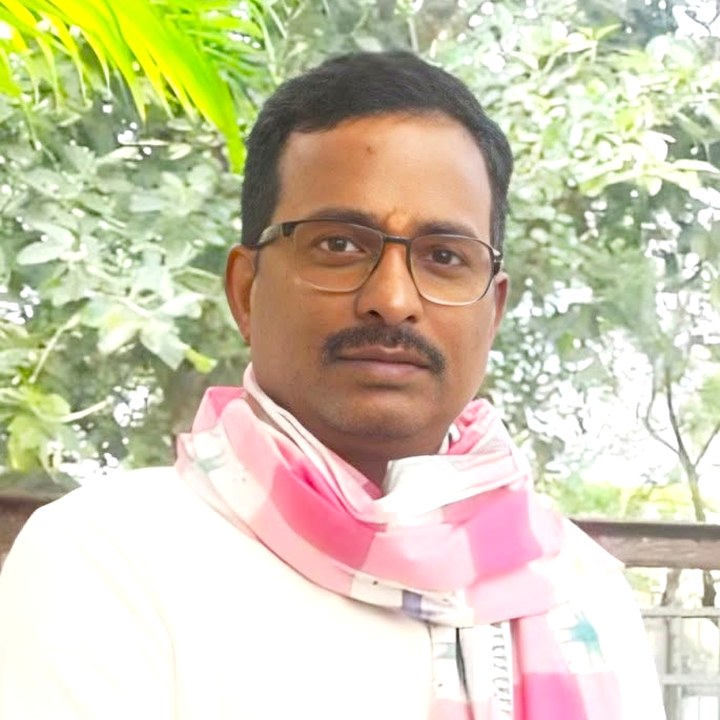
Dr. Padmalochan DASH
Founding Director & Lead Research Fellow
Dr. Padmalochan Dash is the Founder, Director, and Lead Research Fellow of the Bharat Assets Protection Institute™ (B.A.P-I), an independent multidisciplinary research institution dedicated to advancing scholarship and policy innovation in Critical Infrastructure Protection, National Resilience, Strategic Manufacturing, Supply Chain Security, Technology Sovereignty, and Integrated National Security Governance. Established in 2020, B.A.P-I was conceived as a long-term research initiative to bridge the gap between academic inquiry, public policy, industry practice, and national capability development. Under his leadership, the Institute has progressively evolved into a specialised platform examining the protection and resilience of strategic assets upon which modern nations depend: critical infrastructure systems, industrial ecosystems, logistics networks, cyber-physical environments, blue-water infrastructure, and emerging technology domains.
Dr. Dash's academic and professional work is guided by the belief that resilience is no longer simply a matter of disaster recovery or infrastructure protection, but rather a comprehensive governance function integrating economic continuity, technological advancement, environmental sustainability, industrial capability, societal preparedness, and state continuity. This philosophy forms the intellectual foundation of B.A.P-I's research architecture.
His current research focuses on the development of a comprehensive Critical Infrastructure Protection Programme (CIPP) for India, including the proposed Critical Infrastructure Protection Act (CIPA) and the Bharat National Resilience Index (BNRI), a multidimensional resilience assessment framework designed to measure, benchmark, and strengthen governance capability, infrastructure robustness, cyber resilience, supply-chain security, technological sovereignty, disaster preparedness, and institutional continuity across India's strategic sectors.
His scholarly interests extend across Critical Infrastructure Protection, Internal Security, Cyber-Physical Security, Strategic Manufacturing Ecosystems, Logistics and Supply Chain Resilience, Technology Sovereignty, Blue Economy and Maritime Security, Disaster Risk Governance, National Capability Assessment, and Indo-Pacific Strategic Affairs.
Academically, he represents a multidisciplinary convergence of security studies, governance, and civilisational thought. He holds advanced qualifications in South and Southeast Asian Studies and Internal Security. As an author and policy researcher, he has contributed extensively through publications in The Pioneer, FINS Journal of Diplomacy and Strategy, Uday India, and other thematic platforms.
His long-term vision is to help establish a comprehensive national resilience architecture for India, one that harmonises governance, technology, infrastructure, industry, innovation, and societal capability into a unified strategic ecosystem capable of anticipating, absorbing, adapting to, and recovering from the complex challenges of the twenty-first century.

D Sagarika
Supply Chain and Program Leader; PMP, PfMP, PMI-RMP, PMI-PMOCP
D Sagarika is a supply chain and program management leader with over twelve years of experience driving enterprise transformation across Amazon, Cummins, Tata Motors, and other Fortune 500 organizations. She has led cross-functional teams, strengthened governance systems, and delivered high-impact operational programs in complex, high-pressure environments.
Her academic foundation includes advanced supply chain training through MITx, a Master’s in Industrial Engineering Management from Purdue University, an MBA in Marketing and Human Resources from Symbiosis, and an Executive Leadership credential from Cornell University. She also holds PMP®, PfMP®, PMI-PMOCP™, RMP®, and Six Sigma credentials. As a leadership panel speaker at the global SWE conference, she champions capability-driven, human-centered supply chain excellence.
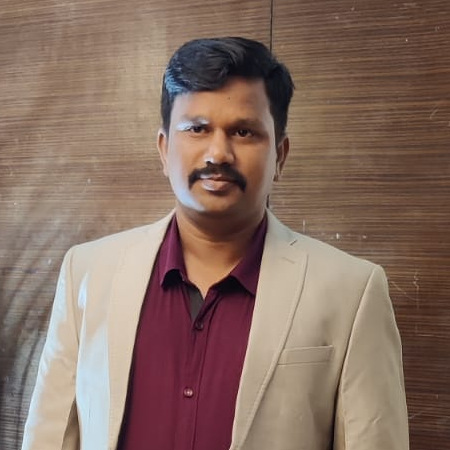
Biswajiban Sahoo
Electrical Engineer and Project Management Professional
Biswajiban Sahoo is an Electrical Engineer and project management professional with over 13 years of experience in power infrastructure, electrical systems, project execution, quality assurance, safety compliance, and utility operations. He has held engineering and project leadership roles with Tata Power Central Odisha Distribution Limited (TPCODL), UPL, Sterling & Wilson Pvt. Ltd., WAPCOS Limited, NHPC Limited, and Gupta Power Infrastructure Ltd.
His professional expertise spans transmission and distribution systems, substation development, rural and urban electrification, project commissioning, regulatory compliance, and infrastructure quality management. His practical experience in strengthening critical energy infrastructure, ensuring operational safety, and delivering large-scale electrical projects contributes valuable technical and implementation perspectives to the Editorial Board of Sanatan Sovereignty.
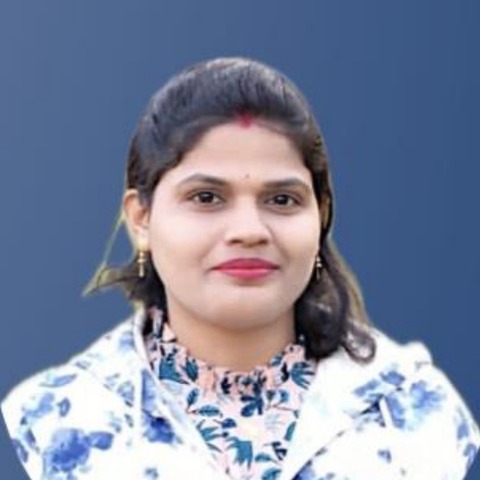
Bhagyashree Panda
Educator and Researcher
Bhagyashree Panda is an educator and researcher with academic interests spanning teacher education, Indian Knowledge Systems, educational technology, educational administration, educational management, soft skills and vocational competence. Her work advocates the integration of indigenous knowledge with contemporary educational practices to develop future-ready teachers capable of fostering innovation, ethical leadership, professional excellence and holistic learner development in the twenty-first century.

Bharat Assets Protection Institute™
Editorial Desk