

Critical Logistics Resilience & Continuity Planning
India's first national lockdown, ordered on 24 March 2020 under the Disaster Management Act, 2005, suspended passenger transport and most commerce while exempting a list of essential services and the movement of essential goods. This retrospective examines how those lifelines were kept running. The legal architecture worked by exemption, and the Ministry of Home Affairs refined it through prompt clarifications as conditions on the ground became clear. Road freight faced constraints of labour and supporting services, which the Government addressed through measures on crew movement, staff passes, toll suspension and the Kisan Rath platform. Indian Railways kept freight moving, raised foodgrain loading above the previous year and ran thousands of Parcel Special trains. The paper credits these achievements and argues that the next step is to convert the experience of 2020 into a standing lifeline continuity doctrine, building on the 2025 amendments to the Disaster Management Act, that designates lifeline sectors and their enabling services in advance.
Focus areas
Keywords
- COVID-19 lockdown
- Disaster Management Act 2005
- essential services
- road freight
- rail freight
- last-mile delivery
- supply chain continuity
- critical infrastructure protection
Case Studies
Keeping the Lifelines Running: How India Sustained Essential Services and Freight in the 2020 Lockdown, and the Case for a Standing Continuity Doctrine
by Dr. Padmalochan DASH
B.A.P-I Retrospective, 2020 to 2024. This paper looks back at 2020 and the lesson it holds for the protection of India's critical infrastructure.
1. Introduction
On 24 March 2020 the Union Government ordered the whole of India into a lockdown of 21 days with effect from the following day (TaxGuru, 2020). Air, rail and road passenger services were suspended, and all establishments not specifically exempted were told to work from home (MHA, 2020, Mar. 24). Overnight, a country of more than a billion people became dependent on a short list of services that were permitted to continue: power, telecommunications, banking, fuel, food, medicines and the transport of essential goods. Keeping those lifelines running across the whole country at once was a task without precedent, and the Union Government, the states and the operators of India's networks carried it out.
Six years later, the first lockdown can be read as a national stress test of India's lifeline sectors, and the record is one India can draw confidence from. The lights stayed on, the telecom networks carried the country's work and schooling, and food moved to markets by road and rail. The Government's orders were refined week by week as conditions on the ground became clear, a responsiveness that served the country well. This paper examines the legal architecture, the road and rail freight record and last-mile supply, and argues that the next step is to convert that experience into a standing lifeline continuity doctrine, so that the arrangements built under pressure in 2020 are ready in advance next time.
2. Governing by Exemption: The Legal Architecture of 24 March
The lockdown rested on two instruments. The National Disaster Management Authority (NDMA), chaired by the Prime Minister, issued an order under Section 6(2)(i) of the Disaster Management Act, 2005, and the Ministry of Home Affairs (MHA) issued its order under Section 10(2)(l) of the same Act (TaxGuru, 2020). Violations were made punishable under Sections 51 to 60 of the Act and Section 188 of the Indian Penal Code (MHA, 2020, Mar. 24). A statute written chiefly for floods, cyclones and earthquakes thus became, for two years, the legal basis of the country's pandemic governance.
The guidelines did not define essential services in the abstract. They worked by exemption, listing what could continue. As modified by 27 March 2020, the list included power generation, transmission and distribution; telecommunications, internet, broadcasting and cable services; banks, insurance offices and ATMs; capital and debt market services notified by the Securities and Exchange Board of India; petrol pumps and LPG outlets; shops for food, groceries, milk, fruit and vegetables; cold storage and warehousing; the delivery of essential goods through e-commerce; and railway, airport and seaport operations for cargo movement (MHA, 2020, Mar. 24). One finds in this list, for the first time in a single national instrument, something close to an operational definition of India's lifeline sectors. It was drafted in a matter of days and it did its job. The experience of the following weeks showed where it could be extended: to the supporting services on which those activities depended, which the MHA then added through prompt clarifications.
3. The Truck, the Driver and the Dhaba: Restoring Road Freight
Road freight was never prohibited for essential goods, and by the start of April the government had notified that non-essential goods could move as well; the transporters' own verdict was that this had not changed conditions on the ground (The Hitavada, 2020, Apr. 2). The practical constraints lay elsewhere. On 2 April 2020 the All India Motor Transport Congress (AIMTC) estimated that only around 5 per cent of the roughly 90 lakh commercial vehicles it represented were operating, mostly LPG and petroleum carriers and short-distance milk tankers (The Hitavada, 2020, Apr. 2). The reasons it gave were practical: drivers had abandoned vehicles and gone home, roadside dhabas were closed, loading and unloading labour was unavailable, and garages and transport offices were shut. A week later transporters estimated that about 3.5 lakh trucks carrying goods worth Rs 35,000 crore were stranded (Business Today, 2020, Apr. 9).
The Government's response was rapid and practical. On 3 April the Union Home Secretary wrote to the states clarifying that trucks could move with one driver and one additional person, that empty trucks returning after delivery were permitted, and that businesses with national supply chains could obtain authorisation to issue passes to critical staff (SCC Online, 2020, Apr. 4). The Centre suspended toll collection on national highways from 25 March to ease emergency movement, and resumed it from 20 April (The Tribune, 2020, Apr. 18). The Ministry of Agriculture launched the Kisan Rath application on 17 April to connect farmers and traders with an expected pool of over 5 lakh trucks and 20,000 tractors (The Tribune, 2020, Apr. 17). Each measure answered a real problem within days of its appearance. Taken together, they amount to a valuable map of what road freight needs in an emergency: not only permission for the cargo, but also the driver's meal, the mechanic's workshop and the loader's journey to the warehouse. That map is now available to be written into India's planning in advance.
4. Rail Freight and the Parcel Train: Indian Railways as a National Lifeline
Indian Railways was the backbone of national supply. Passenger services were suspended for 39 days from 23 March 2020, but freight operations continued (Lok Sabha, 2020, Sep. 16). Loading in April and May 2020 was subdued at about 70 per cent of the 2019 level, and freight loading for the first quarter of 2020-21 stood at 241 million tonnes, 21 per cent below the year before (Railways Yearbook, 2020, Jul. 3). The fall reflected lower industrial demand, while freight operations continued throughout. In essential commodities the railway did better than in a normal year: between 25 March and 28 April 2020 it loaded more than 7.75 lakh tonnes of private foodgrains in 303 rakes, against about 6.62 lakh tonnes in 243 rakes in the same period of 2019 (PIB, 2020, Apr. 29).
The railway also created a new service at short notice. Parcel Special trains were introduced to carry fruit, vegetables, milk, dairy products and agricultural seeds, running even on low-demand routes with stoppages at all feasible locations (PIB, 2020, Apr. 29). By 31 August 2020 the railway had run 5,279 Parcel Special trains, of which 5,126 were timetabled, carrying about 3.16 lakh tonnes (Lok Sabha, 2020, Sep. 16). Demurrage and wharfage charges were waived between 22 March and 17 May 2020 to keep essential goods moving (Lok Sabha, 2020, Sep. 16). The railway's performance owed much to its structure: a single, centrally directed national organisation with its own workforce, control rooms and protection force. The lesson is not that rail is better than road, but that lifeline continuity is strongest where command, workforce and supporting services sit within one structure, a model that can inform the design of continuity arrangements for other sectors.
5. The Last Mile: Calibrating Essential and Non-essential Supply
Last-mile delivery required continuous calibration of what counted as essential. The original guidelines permitted e-commerce delivery of essential goods, and clarifications issued in late March and early April widened the meaning of food and grocery to everything people usually consume daily, while adding hygiene products such as soaps, sanitary pads and diapers (SCC Online, 2020, Apr. 4). The revised guidelines for the second phase of the lockdown were read as reopening e-commerce more widely, but on 19 April the MHA clarified that operations of e-commerce companies for non-essential goods remained prohibited (Business Today, 2020, Apr. 19). These adjustments balanced public health against supply, and they were made quickly. For delivery workers, warehouse operators and police at check posts, however, frequent changes were demanding to absorb, which points to a clear reform: a pre-agreed national schedule of essential goods and services that can be activated at once and applied uniformly across districts.
6. From Experience to Doctrine: A Standing Lifeline Continuity Framework for India
The MHA ended the invocation of the Disaster Management Act for COVID-19 containment from 31 March 2022, after the NDMA concluded there was no further need for it (The Tribune, 2022, Mar. 24). In March 2025 Parliament completed passage of amendments to the Act that created national and state disaster databases and gave the NDMA and state authorities the duty of preparing disaster plans (Manorama Yearbook, 2025, Mar. 26). These are valuable reforms that strengthen India's disaster governance. The natural next step is to build on them with what 2020 showed would add most value: a standing, pre-agreed list of lifeline sectors together with the enabling services on which each depends, drivers and dhabas for road freight, contract labour for ports, repair crews for power and telecom, with continuity rights that take effect automatically when an emergency is declared.
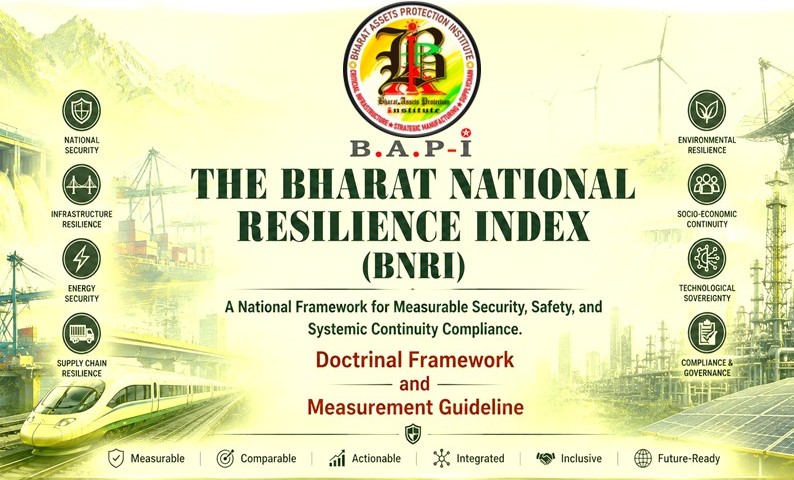
India should, accordingly, adopt a lifeline continuity doctrine that designates these sectors and their enabling services in peacetime, assigns each a continuity plan tested through regular exercises, and provides for nationally valid movement credentials for their workforce. This fits the case, made in this author's earlier work, for a national resilience architecture in which critical infrastructure protection is treated as a dimension of national security in its own right (Dash, 2025, Jan. 30), and for measuring continuity readiness rather than assuming it (Dash, 2025, Oct. 28). In 2020 India's lifelines held because its institutions responded with speed and resolve. A standing doctrine would ensure that the next emergency begins where 2020 ended, with every arrangement already in place.
References 15 sources
- Business Today. (2020, April 19). Coronavirus lockdown: No prohibition on e-commerce firms supplying essential items, govt clarifies. https://www.businesstoday.in/amp/latest/economy-politics/story/coronavirus-lockdown-prohibition-on-e-commerce-firms-supplying-non-essentials-not-essential-items-govt-clarifies-255900-2020-04-19
- Business Today. (2020, April 9). Coronavirus: 3.5 lakh trucks with Rs 35,000 crore of goods stranded. https://businesstoday.in/amp/latest/trends/story/coronavirus-3-5-lakh-trucks-with-rs-35000-crore-of-goods-stranded-254328-2020-04-09
- Dash, P. (2025, January 30). India's national resilience doctrine: Foundation, architecture, and institutional design for critical infrastructure protection and critical sectoral resilience. Bharat Assets Protection Institute™. https://bharatassetsprotection.org/Article/Indias-National-Resilience-Doctrine--Foundation-Architecture-and-Institutional-Design-for-Critical-Infrastructure-Protection-and-Critical-Sectoral-Resilience
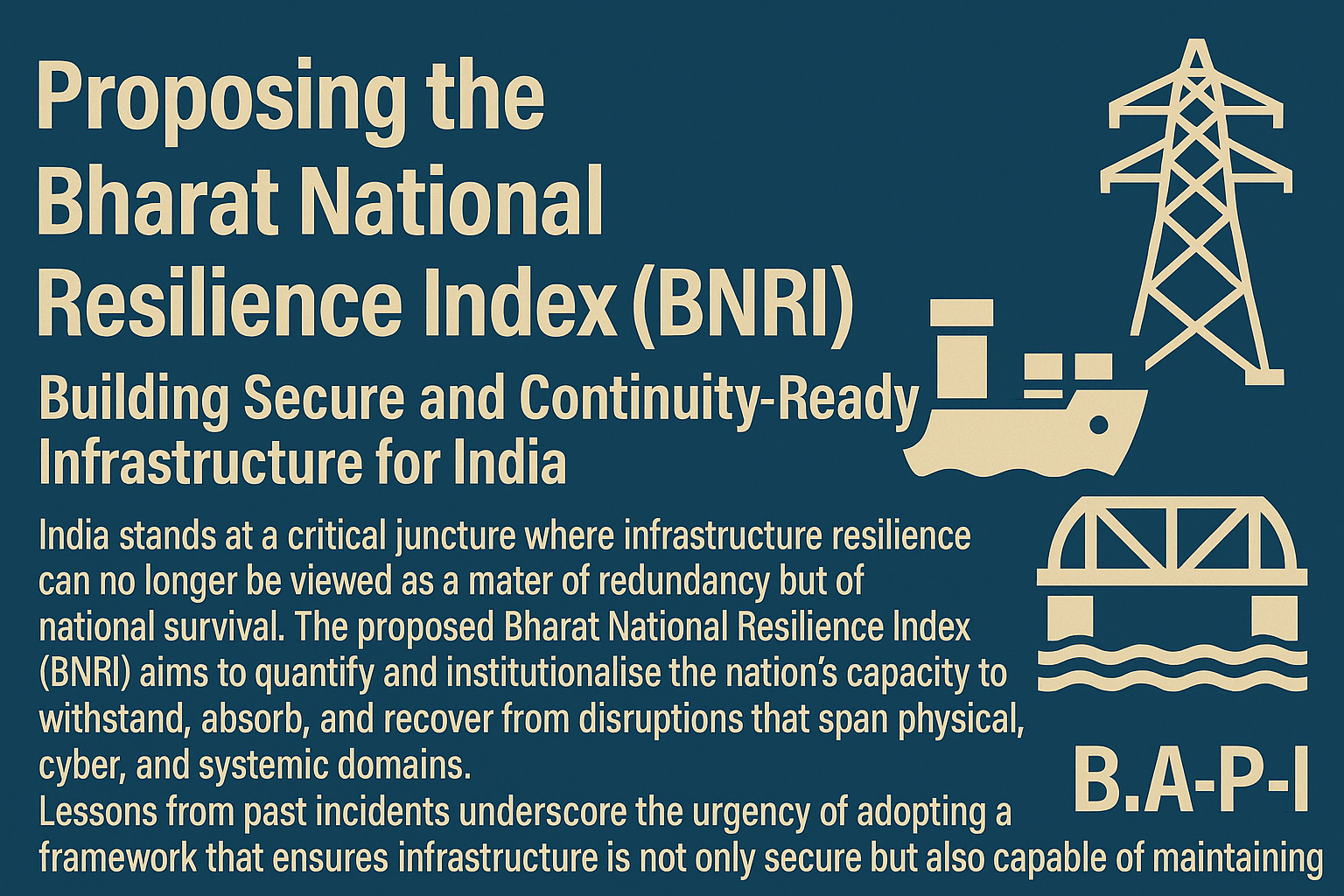
- Dash, P. (2025, October 28). The Bharat National Resilience Index (BNRI): A doctrinal framework for measurable security, safety, and systemic continuity compliance. Bharat Assets Protection Institute™. https://bharatassetsprotection.org/Article/The-Bharat-National-Resilience-Index-BNRI-A-Doctrinal-Framework-for-Measurable-Security-Safety-And-Systemic-Continuity-Compliance
- The Hitavada. (2020, April 2). Lockdown: Only 5 pc of 90 lakh trucks operating: AIMTC. https://www.thehitavada.com/Encyc/2020/4/2/Lockdown-Only-5-pc-of-90-lakh-trucks-operating-AIMTC.html
- Lok Sabha. (2020, September 16). Unstarred Question No. 686 [Answer on railway operations during COVID-19]. Ministry of Railways. https://eparlib.nic.in/bitstream/123456789/968156/1/AU686.pdf
- Manorama Yearbook. (2025, March 26). Amendments to Disaster Management Act. https://www.manoramayearbook.in/current-affairs/india/2025/03/26/amendments-to-disaster-management-act.html
- Ministry of Home Affairs [MHA]. (2020, March 24). Guidelines on the measures to be taken by Ministries/Departments of Government of India, State/Union Territory Governments and State/Union Territory Authorities for containment of COVID-19 epidemic in the country (consolidated, as modified to 27 March 2020). Government of India. https://www.iisc.ac.in/wp-content/uploads/2020/04/MHA-consolidated-guidelines-dated-28.03.2020.pdf
- Press Information Bureau [PIB]. (2020, April 29). Railways continues with its endeavour to ensure availability of essential goods during lockdown. Ministry of Railways. https://www.piyushgoyal.in/railways-continues-with-its-endeavour-to-ensure-availability-of-essential-goods-during-lockdown-private-foodgrains-freight-increased-to-7-75-lakh-tonnes-during-25th-march-to-28th-april20-as/
- Railways Yearbook. (2020, July 3). Indian Railways freight traffic down 21% in Q1. https://railwaysyearbook.com/2020/07/03/indian-railways-freight-traffic-down-21-in-q1/
- SCC Online. (2020, April 4). MHA clarifies on ground level issues being faced by states in ensuring smooth flow of supply chain of essential items during nationwide lockdown to fight COVID-19. https://www.scconline.com/blog/post/2020/04/04/mha-clarifies-on-ground-level-issues-being-faced-by-states-in-ensuring-smooth-flow-of-supply-chain-of-essential-items-during-nationwide-lockdown-to-fight-covid-19/
- TaxGuru. (2020). 21 days lock down due to COVID-19 epidemic: All you want to know. https://taxguru.in/corporate-law/21-days-lock-due-covid-19-epidemic.html
- The Tribune. (2020, April 17). Kisan Rath app launched to help transport farm produce to markets amid lockdown. https://www.tribuneindia.com/news/nation/kisan-rath-app-launched-to-help-transport-farm-produce-to-markets-amid-lockdown-72485/amp
- The Tribune. (2020, April 18). NHAI to resume toll collection on national highways from April 20. https://www.tribuneindia.com/news/nation/nhai-to-resume-toll-collection-on-national-highways-from-april-20-72547/amp
- The Tribune. (2022, March 24). No Covid curbs from March 31, masks stay. https://www.tribuneindia.com/news/nation/no-covid-curbs-from-march-31-masks-stay-380124
How to cite this article
Dash, P. (2020). Keeping the Lifelines Running: How India Sustained Essential Services and Freight in the 2020 Lockdown, and the Case for a Standing Continuity Doctrine. Bharat Assets Online, Bharat Assets Protection Institute™. BOI-BAPI-2020-12-WB-CS-O-00012-4. https://bharatassetsprotection.org/test/bharatassetsprotection/Article/Keeping-the-Lifelines-Running-How-India-Sustained-Essential-Services-and-Freight-in-the-2020-Lockdown
© 2020 Bharat Assets Protection Institute™ (B.A.P-I). All rights reserved.
About the author

Dr. Padmalochan DASH
Founding Director & Lead Research Fellow
Dr. Padmalochan Dash is the Founder, Director, and Lead Research Fellow of the Bharat Assets Protection Institute™ (B.A.P-I), an independent multidisciplinary research institution dedicated to advancing scholarship and policy innovation in Critical Infrastructure Protection, National Resilience, Strategic Manufacturing, Supply Chain Security, Technology Sovereignty, and Integrated National Security Governance.

Comments